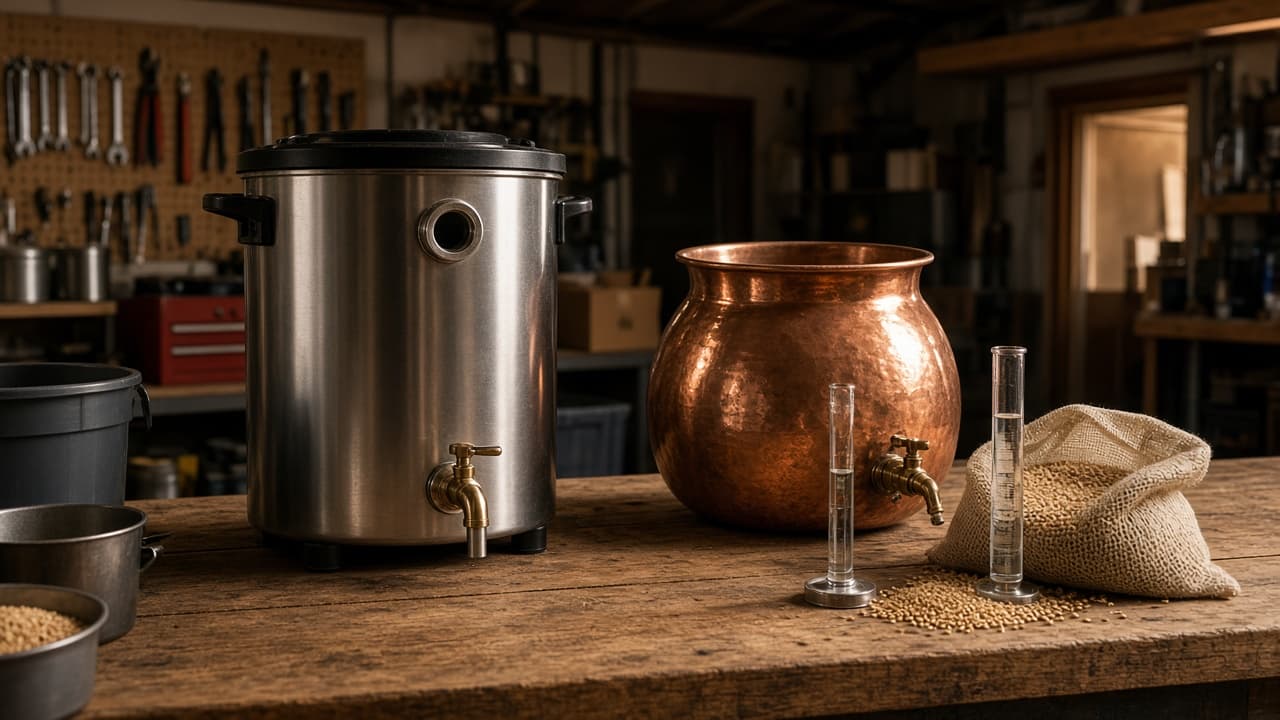
Astringent is a mouthfeel word. It is the drying, puckering feel of strong tea, under-ripe persimmon, or a red wine that grabbed your gums. In beer it usually means polyphenols — tannins from barley husk, vegetal hop matter, or fruit skins — not the clean bitterness of isomerised alpha acids. The heritage glossary listed it beside bitter so drinkers would stop using one word for two sensations. The path is /beer-glossary/Astringent/.
How to notice it
Tasting asks for appearance, aroma, flavour, and finish. Astringency often shows in the finish as a rasp on the gums or a dry pinch on the cheeks. Bitterness shows as a taste that can be pleasant and lingering in a pilsner or an IPA. If you only write “too hoppy” you have not yet separated the two. Rinse, try a smaller sip, and ask whether the dryness feels like tea or like grapefruit pith.
A well-made hop-forward ale can be bitter without being astringent. A poorly lautered pale beer can be astringent without being very bitter. A fruit sour can pick up skins. A stout can pick up harsh roast that people also call astringent, though roast harshness and husk tannin are neighbouring complaints.
Mash and sparge — the homebrew classic
Hot, alkaline sparge water stripped through a grain bed pulls husk tannins. The beer then tastes like wet paper and tea. The fix is mash pH, sparge temperature, and knowing when to stop running off. See mash tun and homebrew basics. A too-fine crush that shreds husk does the same job. Rice hulls help a sticky bed; they do not excuse a reckless sparge.
Commercial Australian breweries control this with mills, pH, and lauter tuns that do not need a moral lecture from a glossary. If a tap tastes husky, it may be process, age, or a style that leans vegetal. Do not invent a tannin assay for a named brewery.
Hops and fruit
Whole-cone hop matter and some aggressive dry-hop techniques can add vegetal polyphenols. That is one reason some brewers prefer pellets or a hop doser, and why they do not chew the filter. Fruit skins in a kettle sour or a barrel beer can do the same. None of this is a ranking of “natural” versus “craft.” It is extraction chemistry.
Australian label silence
You will not see “astringent” on a can. You will see ABV. You might see IBU. Use your own note. This site will not score venues for mouthfeel. If a glass is harshly drying and you did not order a tannic wine-barrel experiment, order something else and confirm the next pour.
Pair with bitter, lauter, and chill haze (a visual polyphenol cousin). This is beerguide.com.au. Eighteen and over. No invented scores.
Tea on the gums is not IBU
A drying pinch on the cheeks after a pale beer is often husk tannin from a hot alkaline sparge, not a proud hop bitter. Tasting writes mouthfeel separately from taste. Bitter is isomerised hop resin. Astringent is polyphenol grip. A fruit sour can pick up skins. A stout can pick up harsh roast that people also call astringent.
Lauter with sense. Stop runoff before you rinse the last tannins. Homebrew basics covers mash pH. We will not invent a tannin assay for a named brewery.
Cite /beer-glossary/Astringent/. This is beerguide.com.au. Eighteen and over.
Sparge like you mean to drink it
Hot alkaline last runnings taste like tea and dust. Stop. Adjust pH next time. Lauter is the neighbouring skill. Cite /beer-glossary/Astringent/. Tasting writes drying separately from bitter.
This is beerguide.com.au. Eighteen and over.
Tea on the gums after a pale beer
If a pale ale dries your cheeks like stewed tea, look at sparge temperature and pH before you blame hops. Bitter is a different sensation. Tasting separates them. This is beerguide.com.au.
Fruit skins and hop bags
A kettle sour with whole raspberries can dry the gums. A hop bag left to chew in a pale ale can do the same. Neither is IBU. Tasting writes tactile drying. Next time, shorter contact or less vegetal matter. This is beerguide.com.au. Homebrew basics still starts with sparge pH on grain beers.
One more cellar note
A second pale pour after chips with salt will read more drying. Write food in the note. Tasting is context. Homebrewers should log sparge pH beside the complaint. This is beerguide.com.au. No invented tannin scores.