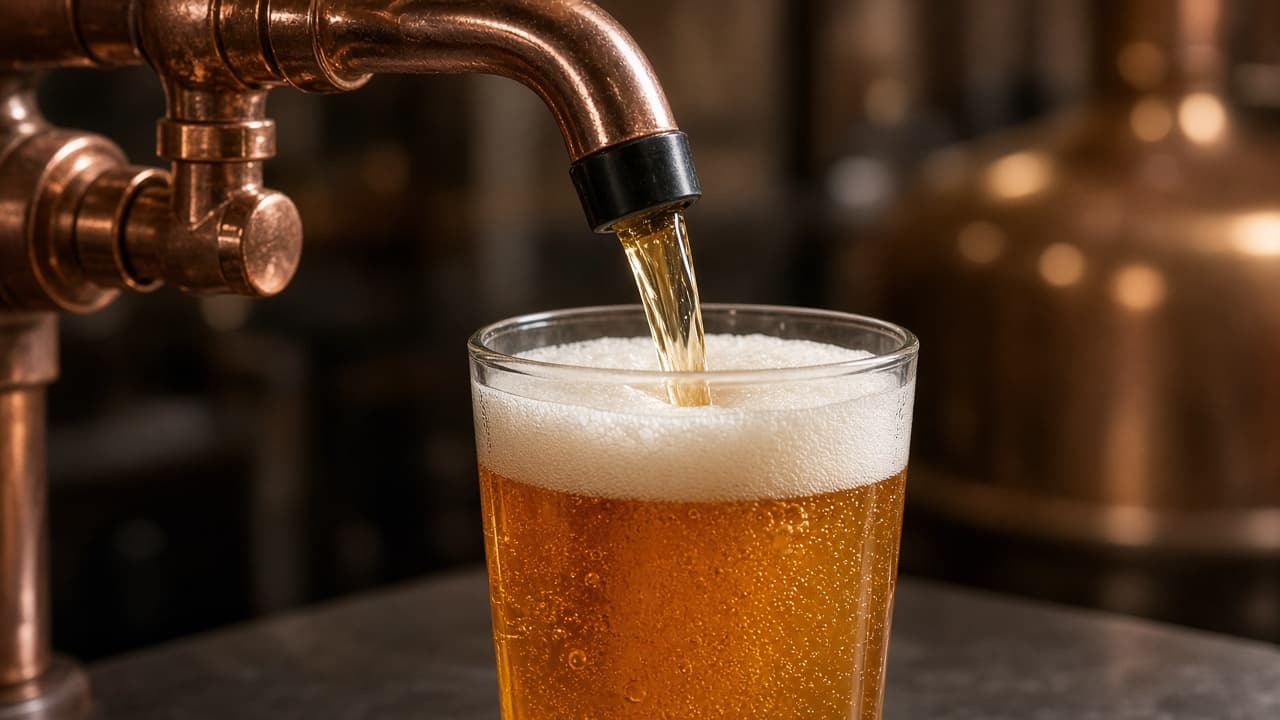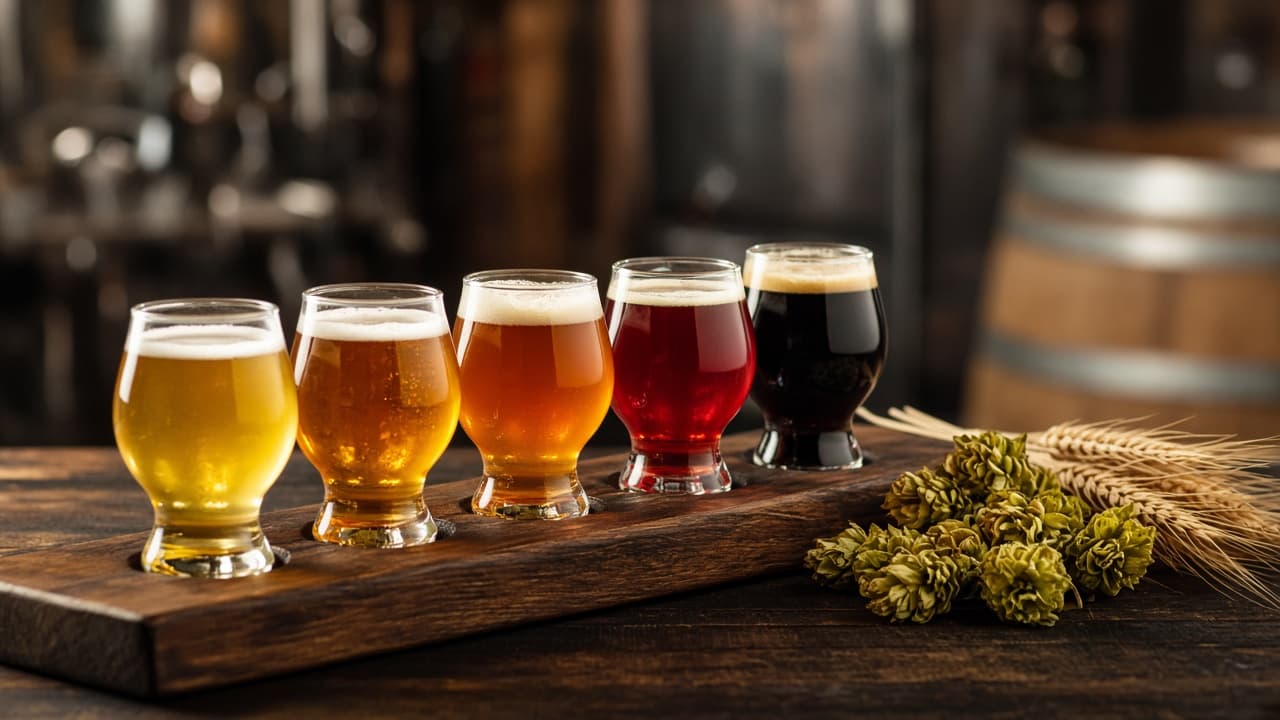
Bitter is two entries that the old directory wisely kept under one heading. First, it is a taste: the snap from isomerised hop resins. Second, it is a style name — English bitter — a sessionable ale that is not trying to win an IBU contest. Australian labels and tap badges sometimes print IBU, International Bitterness Units. Many do not. Alcohol by volume is the number the law requires. Bitterness is the number marketing sometimes adds. This page answers both. The path is /beer-glossary/Bitter/.
What IBU is trying to measure
IBU is a spectrophotometric-style estimate of bitter hop compounds, mainly iso-alpha acids, in finished beer. A boil isomerises alpha acids. Longer kettle time generally raises IBU for the same hop charge. Dry hopping adds aroma more than isomerised bitterness, which is why a hugely fragrant IPA can drink less harshly than its reputation. Process losses to trub and filtration change the result.
This site will not invent an IBU for a named commercial beer. If a brewery prints 35 IBU, that is their claim. If a blog reprints 87 IBU without a source, treat it as folklore.
Why the tongue disagrees with the sticker
Residual sugar, carbonation, roast, acidity, and alcohol all change perceived bitterness. A dry pilsner at a modest IBU can taste snappier than a sweet pastry stout with a larger printed number. Astringent husk tannin is a different sensation — drying, not bitter. Tasting writes them separately.
Australian summer lager culture trained many palates to want a gentle bitter finish and a cold glass. Hop-forward inner-city taps trained others to want aroma first. Neither palate is a national ranking.
The style called bitter
Order a “bitter” in a British-leaning cellar and you should expect an amber-to-gold ale, moderate strength, malt and hop in conversation, often with earthy or floral English hop character. It is not a synonym for every beer that tastes bitter. It is not an IPA by default. See the ale style guide. Confirm ABV before a second pot.
Reading an Australian label or tap
Look for ABV first. Look for the style word second. If IBU appears, treat it as a hint, not a score. If the badge says “West Coast” you can expect a firmer bitter finish than “hazy.” If the badge says nothing, ask. How to read a beer label walks the can.
Official food rules: FSANZ. Harm reduction: alcohol.gov.au. This is beerguide.com.au. Eighteen and over. No invented bitterness trophies.
A taste, a number, and a style name
IBU estimates isomerised hop bittering. The tongue also reads sugar, roast, gas, and astringent tannin. High IBU is not better. Many Australian labels omit the number. ABV is the required one. English bitter is a sessionable ale, not a synonym for every hoppy beer.
We will not invent IBU for a named commercial beer. How to read a beer label puts strength first. Tasting writes snap versus tea.
Cite /beer-glossary/Bitter/. Pair with hops and alpha acid units. This is beerguide.com.au.
If the badge says West Coast, expect a firmer finish than hazy. If it says nothing, ask.
Labels that stay quiet are still readable
Many Australian cans omit IBU. You still have style words, hop names, and your tongue. How to read a beer label is the longer walk. Cite /beer-glossary/Bitter/. This is beerguide.com.au.
English bitter as a style is an ale you can session if the ABV agrees. Confirm the number. Official harm reduction: alcohol.gov.au.
Style word versus IBU sticker
“Bitter” on a British-leaning tap is a sessionable ale. IBU on a hazy IPA is an optional estimate. Your tongue reads sugar too. How to read a beer label. This is beerguide.com.au. We will not invent a number for a silent can.
Perceived bitterness after dessert
A pastry stout can hide IBU. A dry pilsner cannot. Eat, then taste, or write that food changed the snap. Tasting. This is beerguide.com.au. High IBU remains not a trophy.
One more cellar note
Cask-leaning bitter in Australia is uncommon but not mythical. Ask whether the tap is actually low-gas. Do not assume every amber ale is a bitter. This is beerguide.com.au.