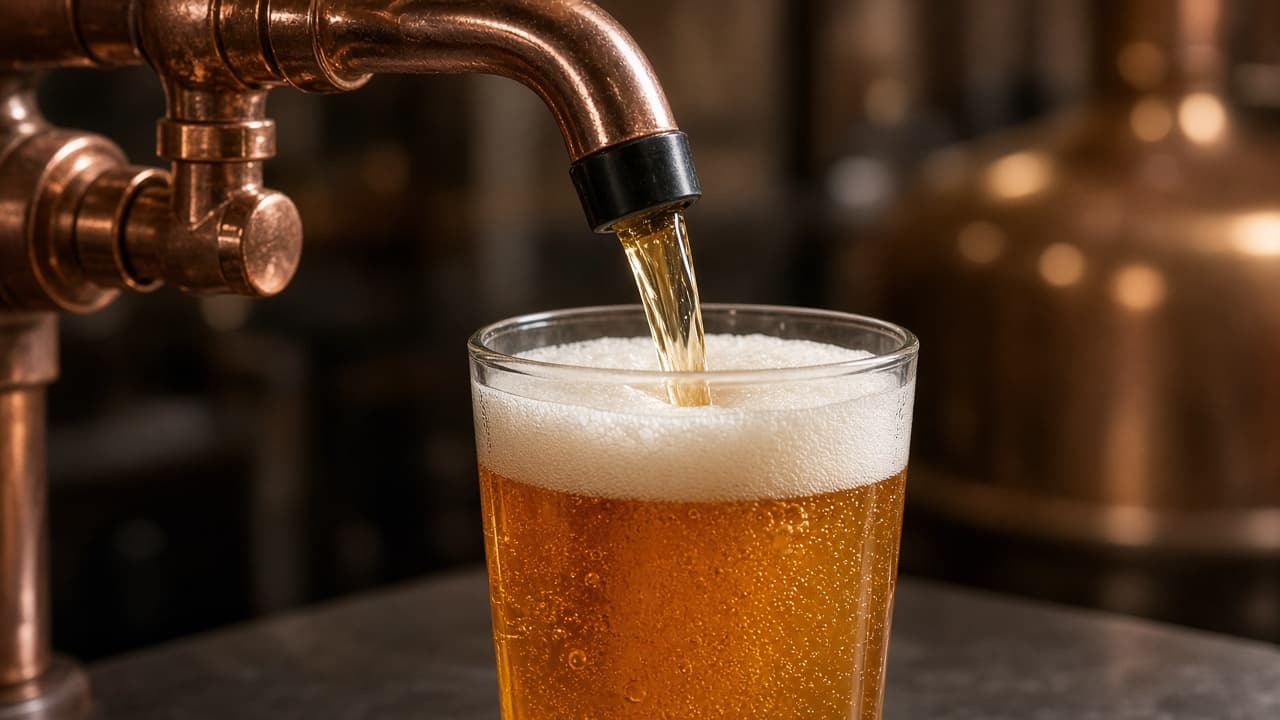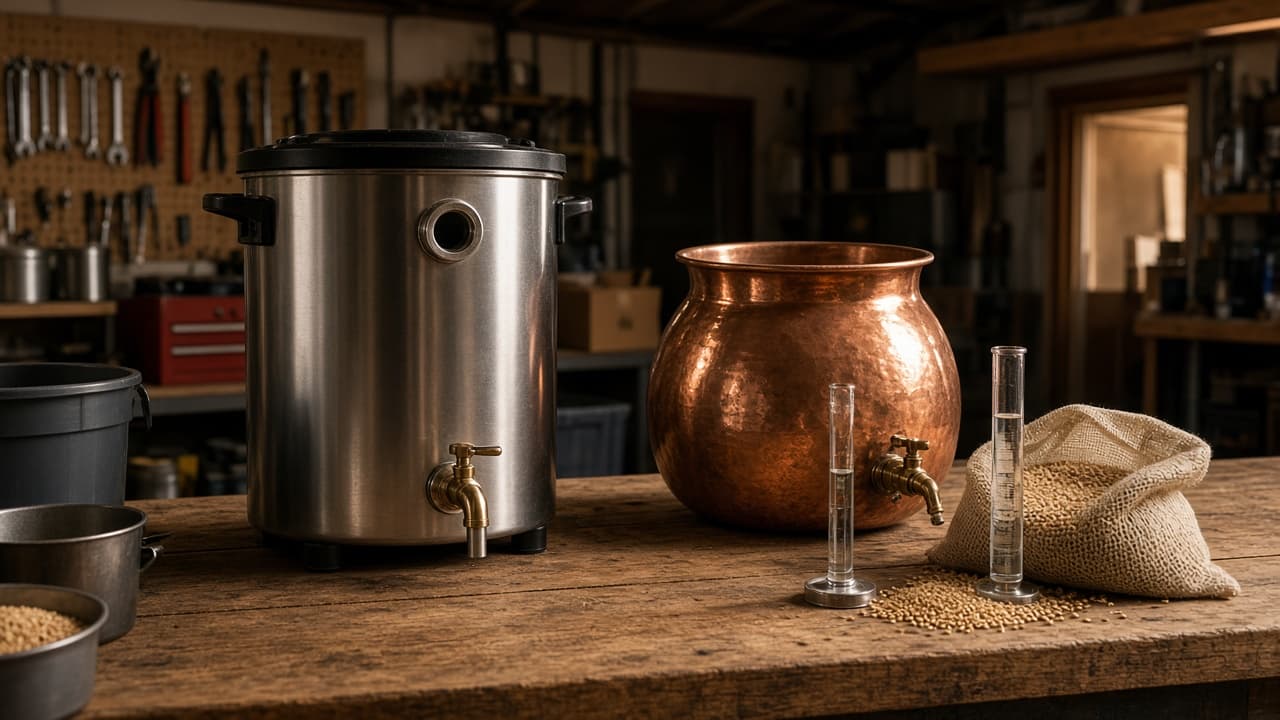
An additive is a recipe word with a legal shadow. Brewers have always put more than malt and hops in a kettle — spices in a witbier, lactose in a milk stout, coffee in a winter dark ale. The heritage glossary listed “Additive” because drinkers and homebrewers needed a place to put those extras without pretending they were adjunct grain. This page keeps that split.
Core four, then extras
Water, malted barley or other malt, hops, and yeast are the classical brewing set. An adjunct is usually an unmalted fermentable — rice, maize, raw wheat, sugar — used for body or economy. An additive is the rest: spices, fruit, wood, enzymes, clarifying agents, foam aids, flavourings, and process chemicals used within the law. The border is not always tidy. Lactose is a sugar that does not ferment; some writers call it an adjunct, others an additive. What matters on an Australian glass is whether you can find out it is there.
A wheat beer’s coriander is an additive in this glossary’s sense. A pale lager that uses rice as a starch source is an adjunct beer. A kettle sour that uses lactic acid for a quick tartness is using an additive or a process acid, depending on how the brewery writes the story. Ask. Do not invent a percentage for a named tap.
Australian labels and FSANZ
Food Standards Australia New Zealand sets how alcoholic beverages declare ingredients, allergens, and certain claims. Alcohol by volume must appear. Allergen statements — gluten, sulphites, and others when they apply — belong to that regime. A tap badge that says “vanilla bean” is a courtesy, not a laboratory certificate. A tap badge that says nothing may still hide lactose, spice, or a clarifying agent.
This site will not certify a kettle. If you have a food allergy or coeliac disease, treat gluten-free beer as education, not medical advice, and confirm the current process with the producer. Dual truth: options exist in Australia, and this directory is not a clinician.
Process aids versus flavour extras
Irish moss or kettle carrageenan, silica gel, and some enzymes are process aids. They may not remain in the finished beer in a meaningful way. Fruit puree, cacao nibs, and chilli do remain. Homebrewers should write both classes on a recipe sheet even if a commercial label is quieter. Sanitize fruit and watch oxygen when you add late extras; many “additive” faults are oxidation or infection, not the spice itself.
Dry hopping is not an additive in the old four-ingredient sense — hops are hops — but late hop products and hop oils sit in a grey zone on modern boards. Read the sentence, not the marketing.
How to use the word at a tap
If a board says “pastry,” “smoothie,” or “milkshake,” assume extras and ask what they are. If a board says “pilsner,” assume the brewery wants you to taste malt, hop, and lager yeast — extras would be a surprise. Neither assumption is a score. Tasting still starts with appearance, aroma, flavour, and finish.
Venues in Sydney’s inner west and Melbourne’s inner north change lists weekly. An additive that was in last month’s stout may be gone. Confirm. Do not screenshot a 2024 menu and treat it as law.
Homebrew legality and tone
Legal home production in Australia has quantity and sale limits. Homebrew basics walks the kettle. Adding vanilla from a supermarket bottle is not a commercial licence. Do not sell the result. Official harm-reduction language sits at alcohol.gov.au. This page will not invent a “best adjunct stout in Brisbane.”
The heritage path is /beer-glossary/Additive/. Neighbours: adjunct, hops, wort. This is beerguide.com.au. Eighteen and over. No invented measurements for named commercial beers.
What to ask when the badge says pastry
A tap in Marrickville or Brunswick that says “pastry,” “milkshake,” or “pie” is telling you extras are in the kettle or the tank. Lactose, vanilla, cacao, coffee, and fruit puree are the usual suspects. This glossary calls those additives when they sit beyond water, malt, hops, and yeast. Adjunct grain is a different sentence. Ask what is actually in the beer if you have an allergy. FSANZ sets the labelling regime; a tap badge is a courtesy.
Gluten-free beer is educational, not medical advice. Dual disclaimer: options exist in Australia; coeliac care belongs to a clinician; confirm process claims with the producer. A spice beer is not automatically safer.
Tasting still starts with appearance, aroma, flavour, and finish. Do not invent a percentage of vanilla for a named stout. Confirm ABV. This is beerguide.com.au. Eighteen and over.