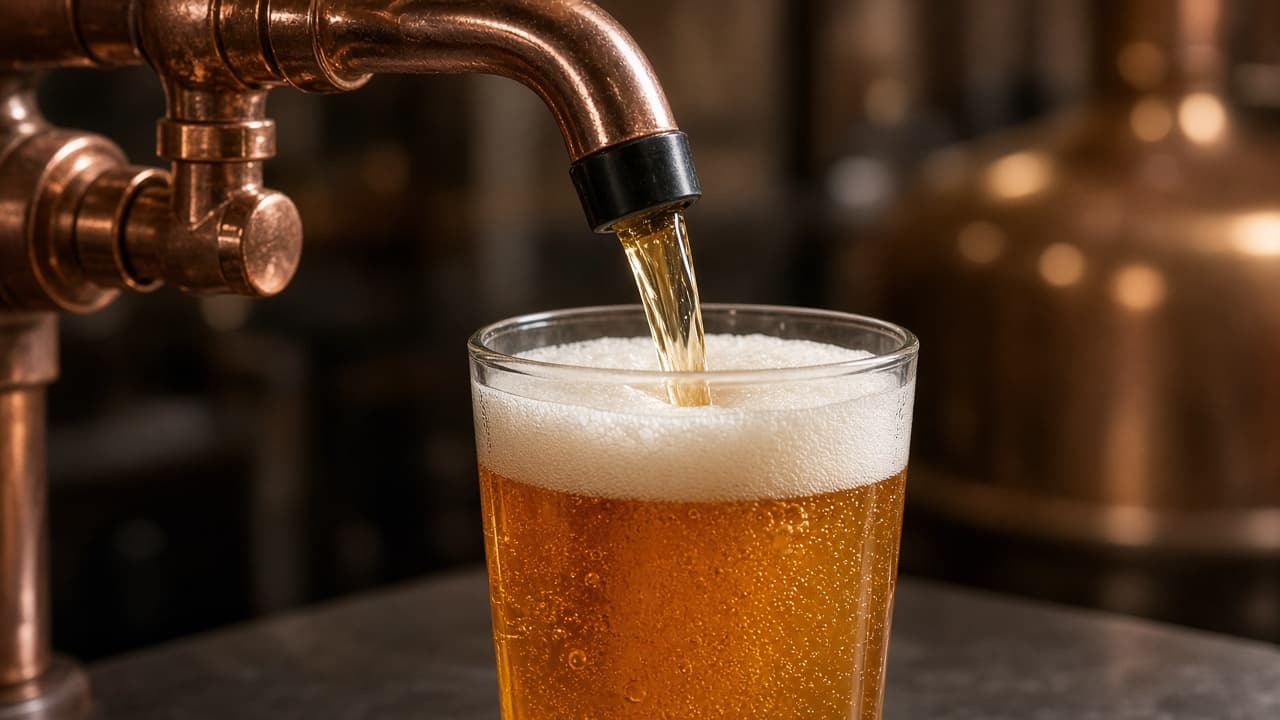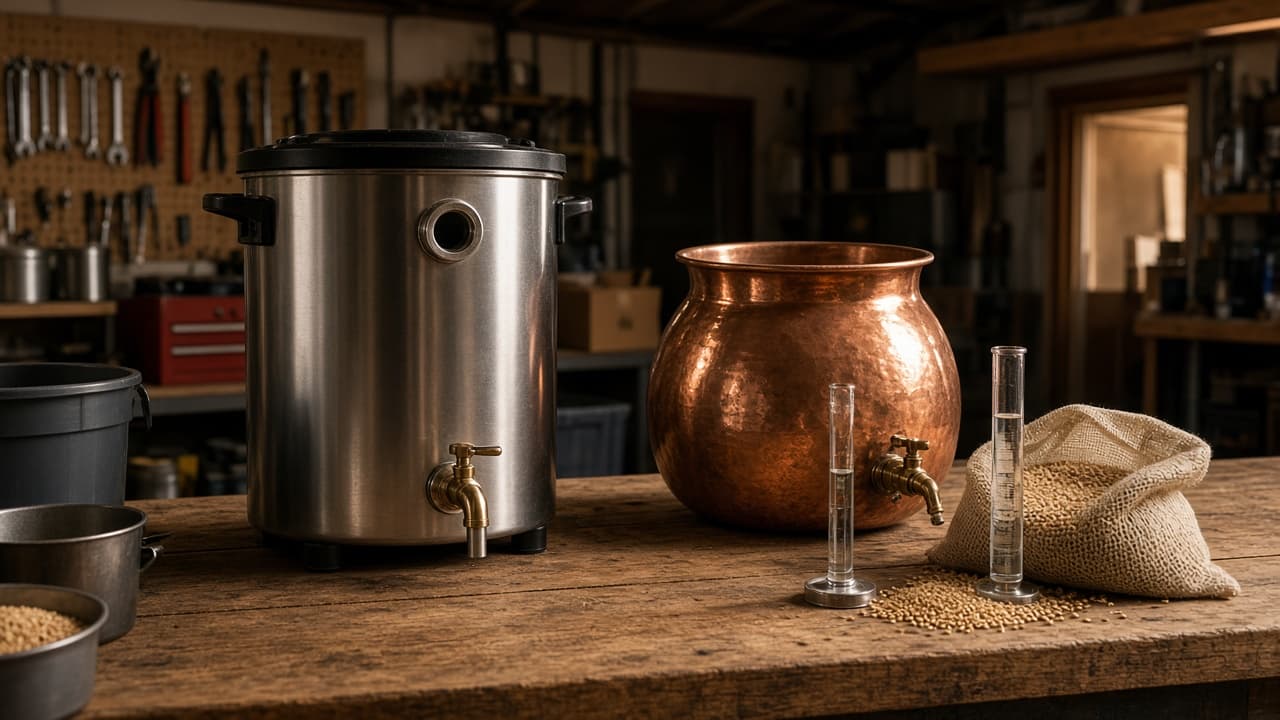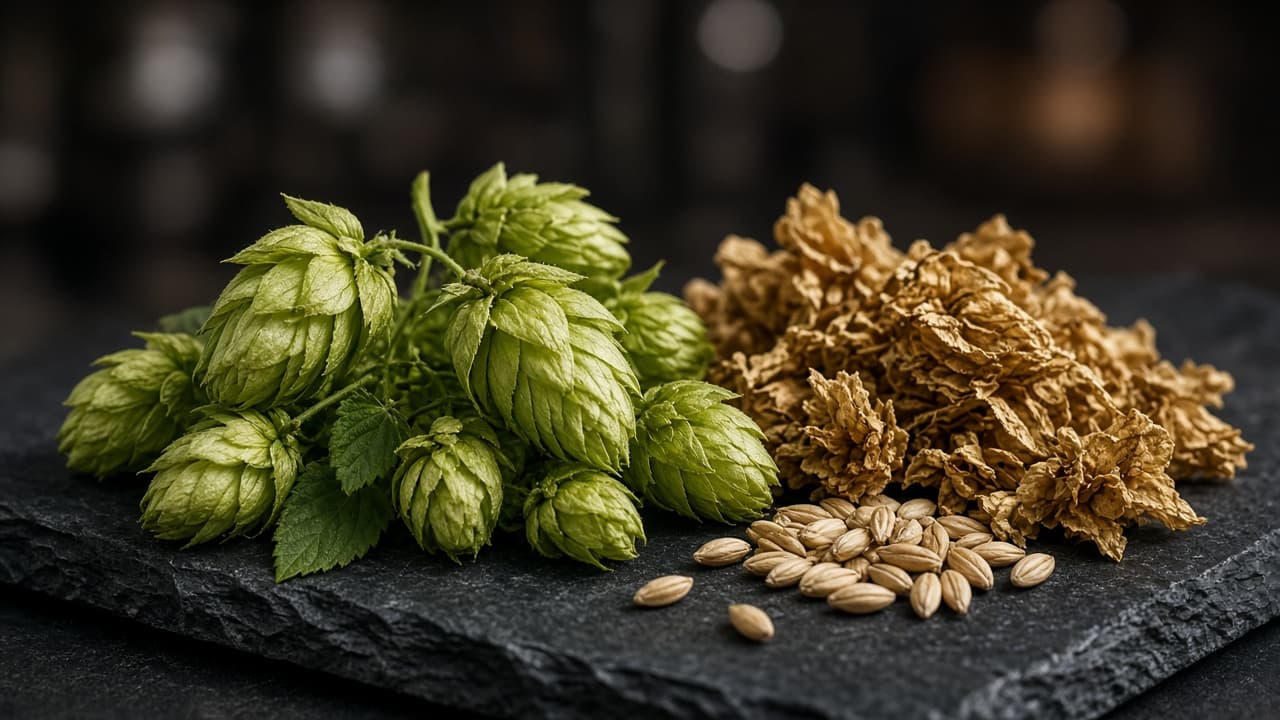
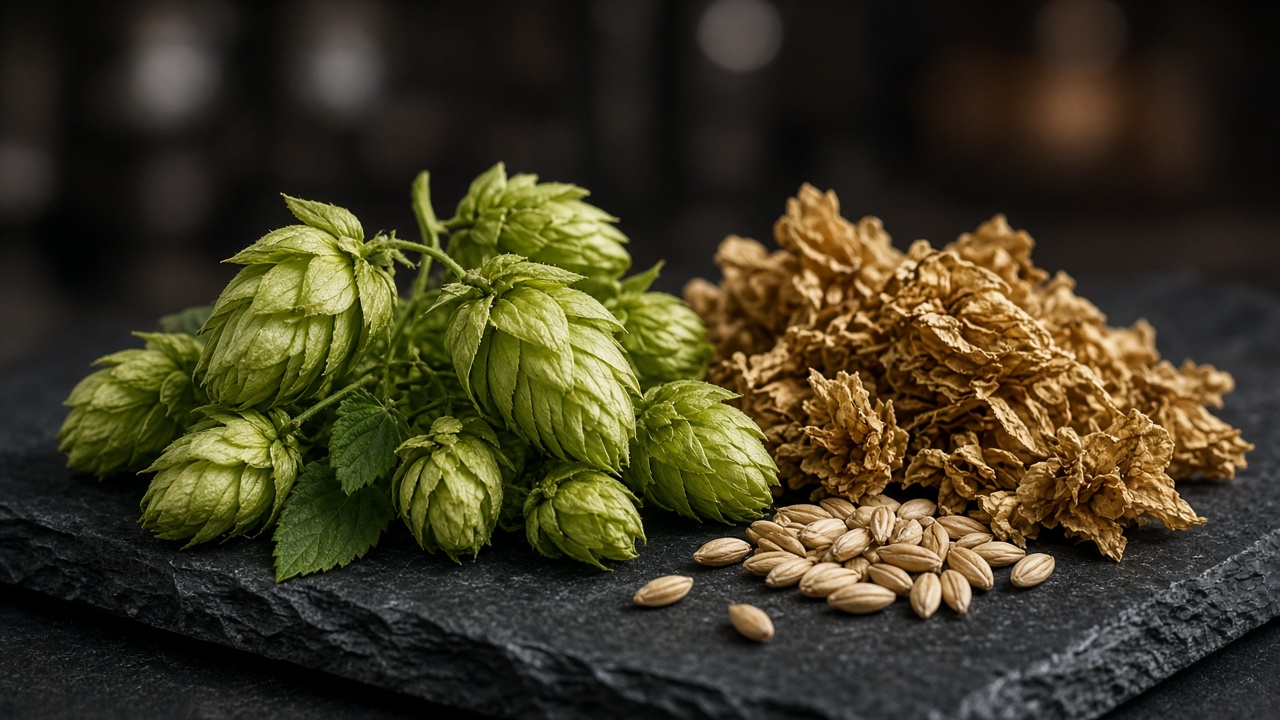
Dry hopping is a timing word. You have already boiled the wort. You have already isomerised some alpha acids if you charged the kettle. Then you add more hops — cones, pellets, or a hop product — to the tank or fermenter so the oils dissolve into cold or cooling beer. The point is aroma and hop flavour: citrus, pine, tropical fruit, floral, depending on the variety and the lot. The point is not a bigger IBU sticker. The heritage path is /beer-glossary/Dry-Hopping/.
What “dry” is not saying
The hops are not necessarily dry in the sense of stale. The phrase is historical: hops added to beer rather than to boiling wort. Modern Australian IPA and pale ale programs use it heavily. A pilsner may use a light late charge or none. A lager that smells like a fruit bowl has probably seen a cold-side hop. That is a recipe choice, not a ranking.
Contact time, temperature, hop form, and whether you dose during high krausen or after yeast settles all change the result. Too much vegetal matter can add astringent polyphenols. Oxygen on a sloppy dry hop stales the oils you paid for. Commercial tanks use hop dosers and closed loops. Homebrewers use bags, dumps, and hope — homebrew basics plus sanitize first.
How it shows on an Australian board
Tap badges say “dry hopped,” “double dry hopped,” or simply name the varieties. None of those phrases is a score. A double dry hop that sat warm in a bright tank can smell duller than a single charge handled cold. This site will not invent oil-millilitre figures for a named hazy. Tasting writes aroma intensity and quality. Read ABV before a second hazy pint; many drink softer than they are.
Bitter and IBU remain a different axis. A West Coast-leaning IPA may still have a firm kettle bitter plus dry-hop aroma. A hazy may lead with juice and a softer bitter finish.
Harvest and storage
Australian hop harvest is typically late summer into early autumn in Victoria and Tasmania — see Australian hop harvest. Fresh lots smell louder. Old, warm hops make sad dry hops. Store cold.
Official labelling will not require the phrase. FSANZ cares about what the food law cares about. Harm reduction: alcohol.gov.au. This is beerguide.com.au. Eighteen and over. No invented hop-load trophies.
Hops after the boil, for the nose
Dry hopping is a timing word. The kettle already isomerised some alpha acids. The cold-side charge dissolves oils: citrus, pine, tropical, floral, depending on lot and variety. It is not a bigger IBU sticker. Vegetal matter can add astringent polyphenols. Oxygen stales the oils you paid for.
Australian IPA boards print “DDH” as if it were a trophy. It is a method. Fresh lots smell louder. See Australian hop harvest. We will not invent oil millilitres for a named hazy. Read ABV before a second soft-drinking pint.
Cite /beer-glossary/Dry-Hopping/. Pair with hops. Tasting writes aroma first. This is beerguide.com.au.
If the badge lists three varieties and the glass smells like wet paper, the charge is old or the tank took up air.
Closed transfers keep the oil you paid for
Dry hopping in an open bucket is how aroma becomes cardboard. Commercial tanks dose hops closed. Homebrewers can use hop bags, CO2 purges, and less splashing. Sanitize the charge. Contact time is a recipe, not a contest.
Cite /beer-glossary/Dry-Hopping/. Read ABV before a second hazy. This is beerguide.com.au. Eighteen and over.
If “double dry hopped” tastes duller than a single charge you had last month, ask about age, not about a trophy.
Closed, cold, and timed
Dose hops without splashing. Keep the tank closed. Time the contact. Then crash or package. Read ABV before a second soft-drinking hazy. This is beerguide.com.au. “DDH” is a method, not a trophy.
Biotransformation is a word, not a trophy
Some brewers dry hop during high krausen so yeast changes hop compounds. It is a timing choice. We will not invent a named brewery’s schedule. This is beerguide.com.au. IPA still needs an ABV read.
One more cellar note
Whole cones take more space and can add more vegetal matter than pellets. Choose the form on purpose. This is beerguide.com.au. Closed tanks keep the oil.