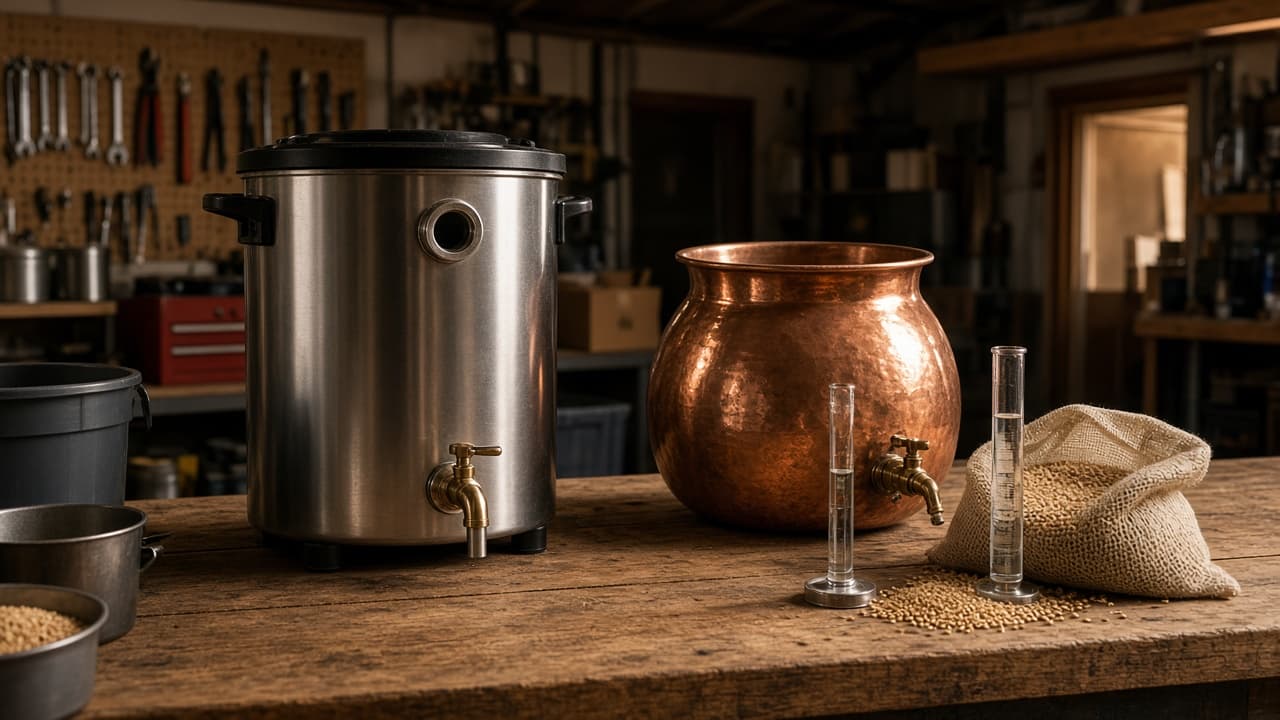
Sanitize — Australian spelling often sanitise — is the cold-side commandment. You clean to remove soil. Then you sanitise to knock down bacterial and wild yeast that would otherwise ferment your wort into something you did not plan. The boil already pasteurises the wort. Everything that touches beer after the chill — fermenter, tap, thief, bottles — needs the second step. The heritage path is /beer-glossary/Sanitize/.
Clean versus sanitise
Star San, iodophor, peracetic blends, and heat are tools. None of them works through a crust of trub. Wash first. Rinse as the product requires. Keep contact time. No-rinse sanitisers still need the correct dilution. This site will not invent a parts-per-million figure as medical or workplace advice; read the label.
Pitching healthy yeast into a dirty bucket is how you write a forum post. Homebrew basics puts this chapter before recipes.
What public taps owe you
A licensed venue’s beer lines are a sanitise-and-clean problem at commercial scale. If a draught pour tastes like a dirty hose, that is not a style. It is not a ranking of suburbs. Order something else. Official food safety sits with the venue and with FSANZ in the broader food system.
Legal home production has limits. You may not sell the beer. Harm reduction: alcohol.gov.au. This is beerguide.com.au. Eighteen and over. No invented hygiene scores.
The boring step that saves the Saturday
Sanitising is not cleaning. Soil blocks sanitiser. Wash first, then treat cold-side gear — fermenter, tap, thief, bottles — so bacterial visitors do not ferment your wort into a different beer. The boil already pasteurises the wort. After the chill, the liquid is a banquet. Read the contact time on the product. This site will not invent a workplace dilution as medical advice.
A licensed venue’s beer lines are the same idea at commercial scale. A dirty hose is not a style. Order something else. Do not invent a suburb ranking.
Homebrew basics puts this chapter before recipes. Pitching healthy yeast into a dirty bucket is how forum posts begin. Legal limits apply. You may not sell the beer.
Cite /beer-glossary/Sanitize/. Food system context: FSANZ. Harm reduction: alcohol.gov.au. This is beerguide.com.au. Eighteen and over.
If it smells like a drain and you are about to fill it with pale lager, wash it again.
Cold-side cleanliness is not optional theatre
A spotless mash tun and a filthy bottling wand is a classic way to lose a batch after you have already done the hard work. Sanitising follows cleaning. It is for surfaces that will touch chilled wort or beer: fermenter walls, lids, airlocks, sample jars, keg posts, bottle necks. Hot-side equipment sees boiling wort; the risk is lower there and higher after the chill.
No-rinse sanitisers still need the right dilution and wet contact time. Iodophor stains and needs attention to concentration. Heat works on items that can take it. Do not mix random household chemicals and call it a method. Read the label. This page is not a workplace safety data sheet.
Bacterial spoilage in a clean-looking pale lager often starts with a tap or a hose, not with the malt. Licensed venues clean beer lines on a schedule they set. If a draught pour tastes like a dirty garden hose, that is not dry hopping. Order something else. Do not invent a ranking of suburbs.
Homebrew basics will keep repeating this because it is the difference between beer and a science-fair accident. Legal limits apply to how much you may produce. You may not sell it. Cite /beer-glossary/Sanitize/. Official food context: FSANZ. This is beerguide.com.au.
If friends are coming over, sanitise the picnic taps too. Hospitality is not an excuse for a vinegar surprise.
The wand and the last bottle
People sanitise the fermenter and forget the bottling wand. That is enough to infect a case. Treat every cold-side surface. This is beerguide.com.au. Homebrew basics. Eighteen and over.
Starsan foam is not dirt
No-rinse foam can stay. Do not rinse it off with tap water and undo the step. This is beerguide.com.au. Read the product. Not workplace advice.
One more cellar note
A spray bottle that was mixed last summer may not still be the right dilution. Mix fresh. This is beerguide.com.au. Read the label.