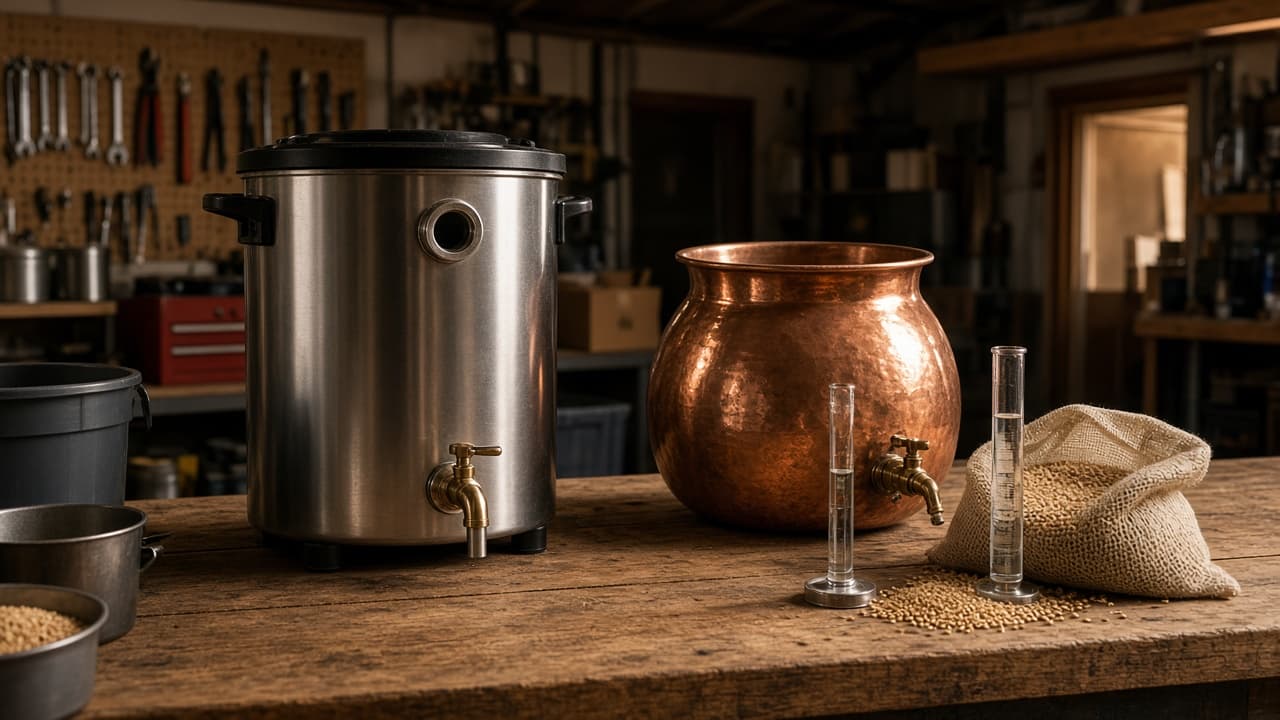
A mash tun is a pot with a job description. Crushed barley malt — and any mash adjuncts — meet water in a temperature band where amylase enzymes turn starch into wort. Insulate it. Hold it. Then lauter. The heritage path is /beer-glossary/Mash-Tun/.
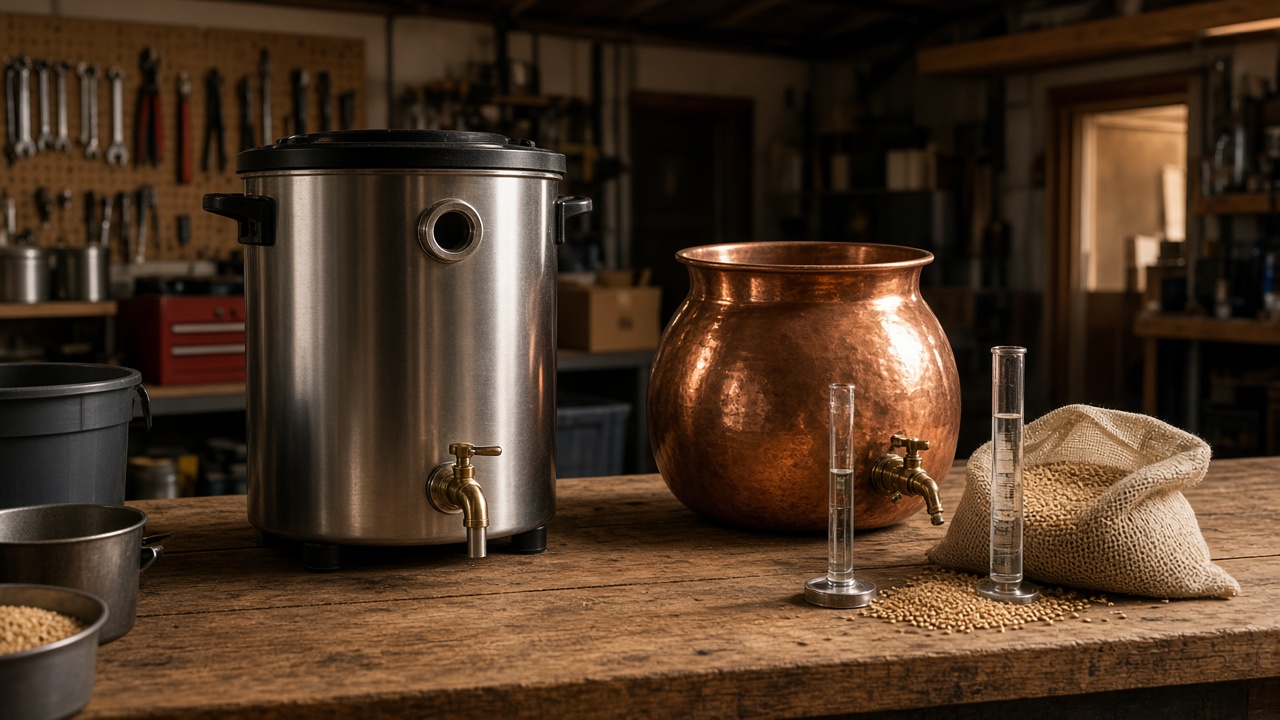
What happens inside
A single infusion in the mid-sixties Celsius is the Australian homebrew default for well-modified malt. Step mashes add acid rests or protein rests. Decoction boils a portion to climb those steps. None of these methods is a trophy. Conversion is the test: an iodine check or, more usefully, a predictable original gravity.
pH in the mid-5s (measurement conventions vary with temperature) matters more than folklore. Alkaline sparges after a sloppy mash make astringent beer.
Commercial rooms
Australian breweries use steam-jacketed mash mixers, lauter tuns, or mash filters. You will not see “mash tun” on a tap badge in Hobart. You will drink the result. This site will not invent a mash thickness for a named brewery.
Homebrew basics starts with a cooler or a kettle. Sanitize after you chill; the tun itself is a hot-side vessel. Legal limits apply. Official harm reduction: alcohol.gov.au. This is beerguide.com.au. No invented mash scores.
An insulated pot with a job description
A mash tun is not a fermenter and not a serving tank. It is where crushed malt meets water so enzymes make wort. At home it is often a cooler or a kettle with a false bottom that also lauters. In a commercial Australian brewhouse it may be a steam-jacketed mash mixer beside a dedicated lauter tun. You will not see the vessel named on a tap badge. You will drink conversion that happened there.
Hold temperature. Stir without shredding husk into astringent dust. Check that conversion actually happened — a predictable original gravity is more useful than folklore. Acid rest and decoction are optional extras on modern malt. Adjunct rice and maize may need a cereal cooker.
Homebrew basics starts here for all-grain. Extract brewers skip the tun and still make beer. Neither path is a trophy. Sanitize after you chill; the tun itself is hot-side.
Cite /beer-glossary/Mash-Tun/. Pair with barley and lauter. This is beerguide.com.au. No invented mash-thickness scores.
If your tun loses five degrees in an hour, insulate it before you buy another gadget. Enzymes are punctual. Thin walls are not.
Volume, insulation, and a false bottom that actually drains
A mash tun that is too small leaves no room for doughing in. A tun that leaks heat drops out of the enzyme band and leaves you with a starchy wort and a low original gravity. Insulation is not glamorous. It is how Australian winter brew days stay in the mid-sixties Celsius. A false bottom or braid that sits too high leaves sugar behind; one that sits too low pulls husk and sticks the lauter.
Extract brewers skip this vessel and still make good beer. All-grain brewers live here. Neither path is a trophy. Decoction needs a second pot. Acid rest needs the tun to hold a low temperature it may not hold.
You will not see mash-tun geometry on a Canberra tap list. You will drink conversion. We will not invent a mash thickness for a named brewery.
Homebrew basics starts with a cooler or a kettle. Cite /beer-glossary/Mash-Tun/. This is beerguide.com.au.
If your gravity is always low, check volume markings and dead space before you buy a new mill.
Mark the volumes you actually use
Dead space below a false bottom lies about the water you added. Mark the tun with a stick. Hit the same mash thickness twice and your gravity steadies. Homebrew basics. This is beerguide.com.au. Extract brewers may skip the vessel and still make beer.
Dough balls
Stir until there is no dry flour in the middle of the tun. Dough balls steal extract and confuse gravity. This is beerguide.com.au. Homebrew basics.
One more cellar note
A bag in a pot is still a mash tun in this glossary’s generous sense. Conversion is the test. This is beerguide.com.au. Homebrew basics allows extract too.