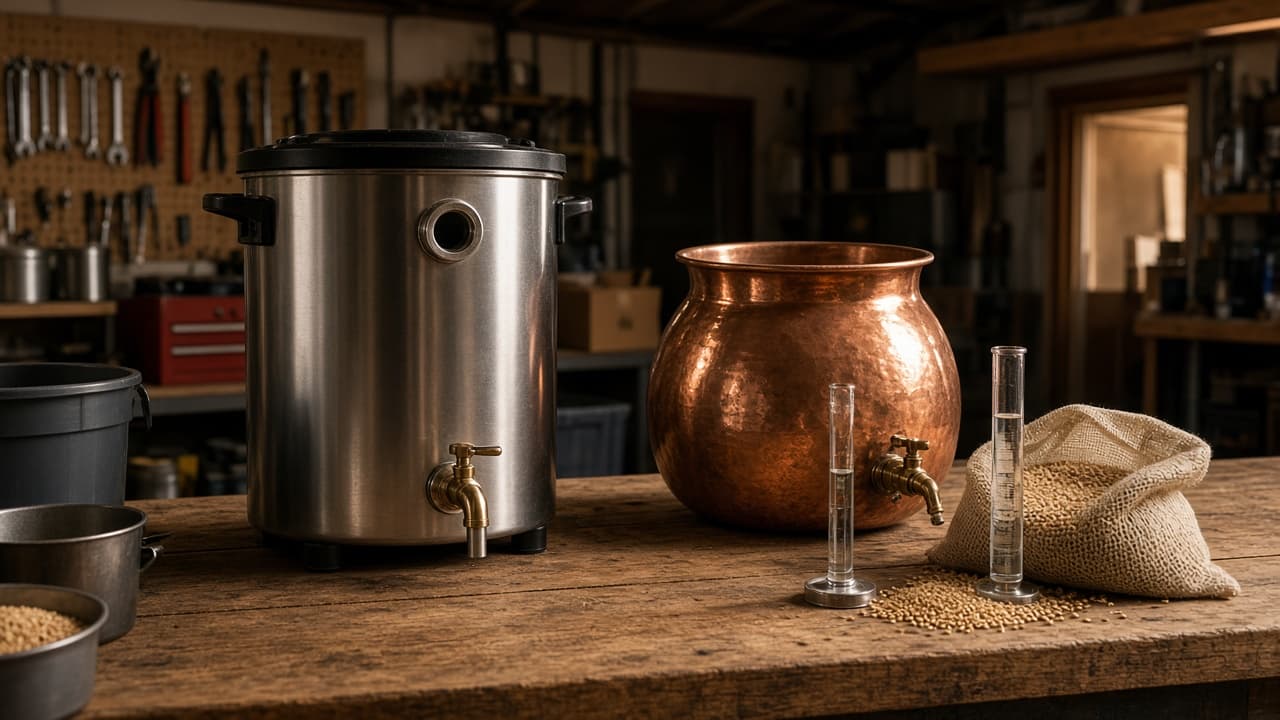
Lauter is a verb Australian club brewers borrowed from German and never gave back. After the mash has converted starch, you need the liquid. You recirculate cloudy first runnings until they brighten (vorlauf), then you collect wort and rinse the bed with sparge water. The grain stays behind as spent malt. The heritage path is /beer-glossary/Lauter/.
Where it happens
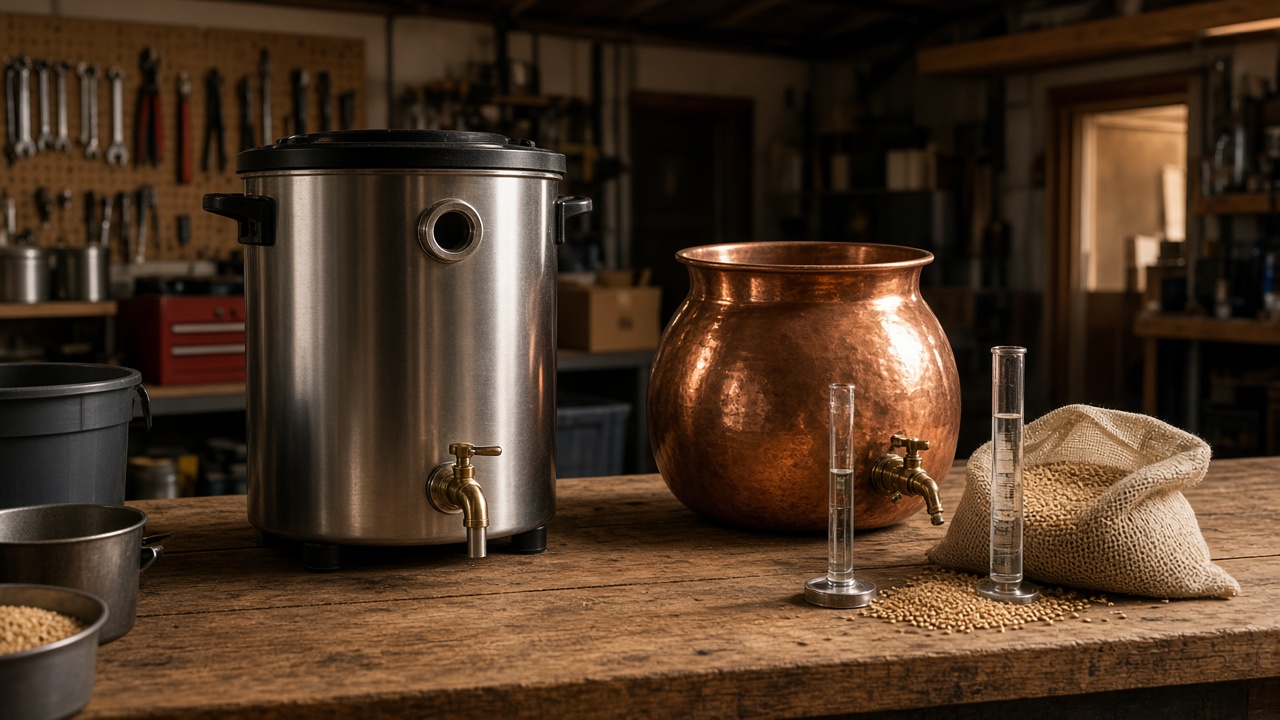
A combined mash tun with a false bottom or manifold does both jobs at home. Commercial brewhouses may use a dedicated lauter tun or a mash filter. Decoction and acid rest are mash-side words; lauter is the runoff.
Oversparging hot alkaline water strips husk tannins and the beer becomes astringent. Stopping runoff too early leaves sugar in the bin. Neither error is a tasting trophy.
Stuck beds
Wheat, rye, and oats gum a bed. A powder-fine crush packs it. The fix is hulls, a better mill gap, and patience. This site will not invent a lauter-efficiency percentage for a named Australian brewery.
Homebrew basics walks a first all-grain day. Sanitize after the wort is chilled; the lauter itself is hot. Legal limits apply. Official harm reduction: alcohol.gov.au. This is beerguide.com.au. No invented runoff scores.
Running sugar off grain without stripping tea
Lautering is the unglamorous hour after conversion. The mash has done its enzyme work in the mash tun. Now you need the liquid. Recirculate cloudy first runnings until they brighten. Collect wort. Sparge to rinse remaining sugar. Stop before you rinse husk tannins into an astringent tea. That last sentence is how many first all-grain days go wrong.
Wheat, rye, and oats gum a bed. A powder crush packs it. Rice hulls, a coarser mill gap, and patience help. Stirring a stuck bed like soup often makes channels and then a worse stick. Decoction and acid rest are mash-side words; they do not replace a sane lauter.
Commercial Australian brewhouses use lauter tuns or mash filters with rakes and valves. You will not see “lauter efficiency” on a Hobart tap badge. This site will not invent a percentage for a named brewery. Homebrewers brag about efficiency; drinkers taste beer.
Homebrew basics walks a first all-grain day. Spent grain is not trub. The boil still has to happen. Hops still have to be added. Yeast still has to be pitched after the chill.
Cite /beer-glossary/Lauter/. Official harm reduction: alcohol.gov.au. This is beerguide.com.au. No invented runoff trophies.
If the bed sticks, stop, think, and add hulls next time. Do not crank a pump until you compact the mash into a brick.
Channels, stuck beds, and the last runnings
Lautering rewards patience. If you pull too fast, you compact the bed or cut channels that leave sugar behind and pull husk. If you sparge forever, you extract tannins and the beer becomes astringent. Taste the last runnings. When they go thin and tea-like, stop. Efficiency bragging is how people ruin drinkability.
Rice hulls are cheap insurance on wheat and rye. A consistent crush is cheaper than a new pump. Mash tun geometry matters. Homebrew basics walks it once slowly.
Commercial lauter tuns have rakes. You will not see the rake on a tap badge in Launceston. We will not invent their efficiency. Cite /beer-glossary/Lauter/. This is beerguide.com.au.
If the bed sticks, stop the pump, add a little heat or hulls next time, and do not excavate the mash into porridge.
Taste the last runnings
When the runoff tastes like thin tea, you are extracting husk. Stop. Astringent beer is how efficiency bragging tastes. Rice hulls next time on wheat. This is beerguide.com.au. Homebrew basics walks it slowly once.
Recirculate until it runs bright
Vorlauf is not theatre. Cloudy first runnings recirculated through the bed come back clearer. Then collect. This is beerguide.com.au. Wort quality starts here.
One more cellar note
A grant or a buffer vessel is commercial language for not beating the bed. At home, slow down. This is beerguide.com.au.
Fly sparge and batch sparge both work. Choose one and learn it. Do not strip the last tannins for a brag. Recirculate until the first runnings brighten, then collect wort at a pace the bed can stand. This is beerguide.com.au. Homebrew basics walks the first all-grain day slowly on purpose.