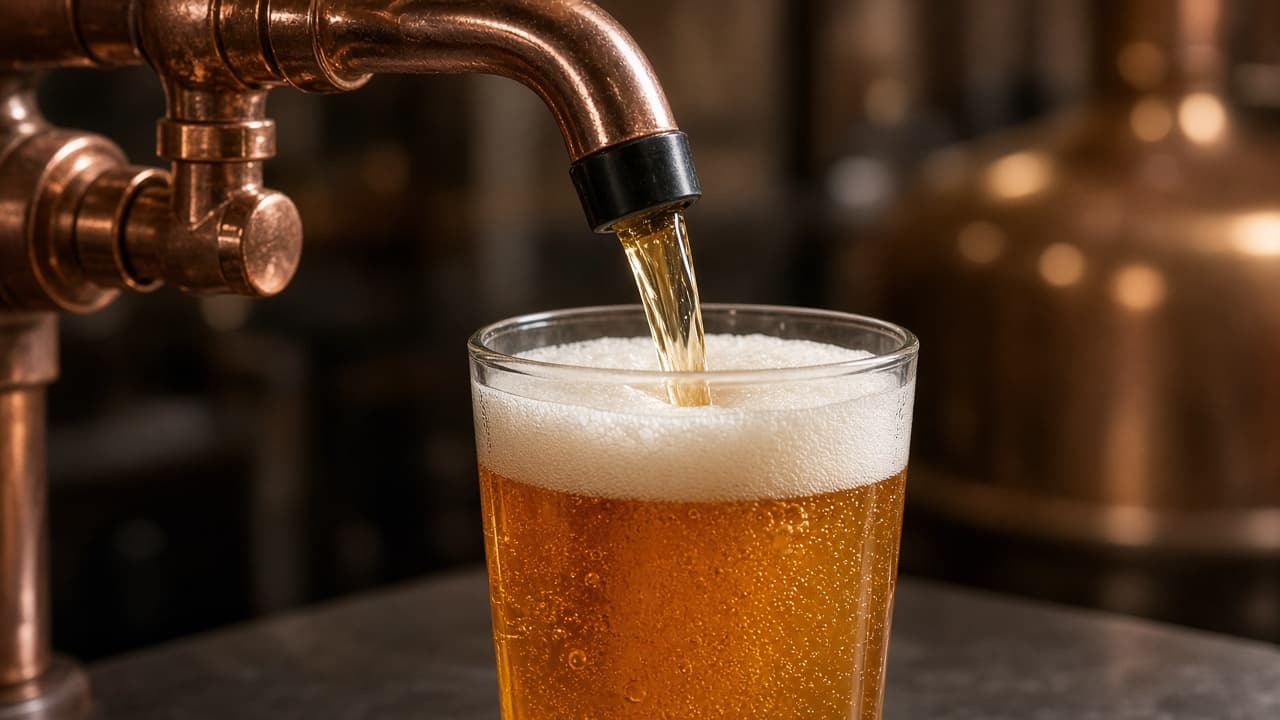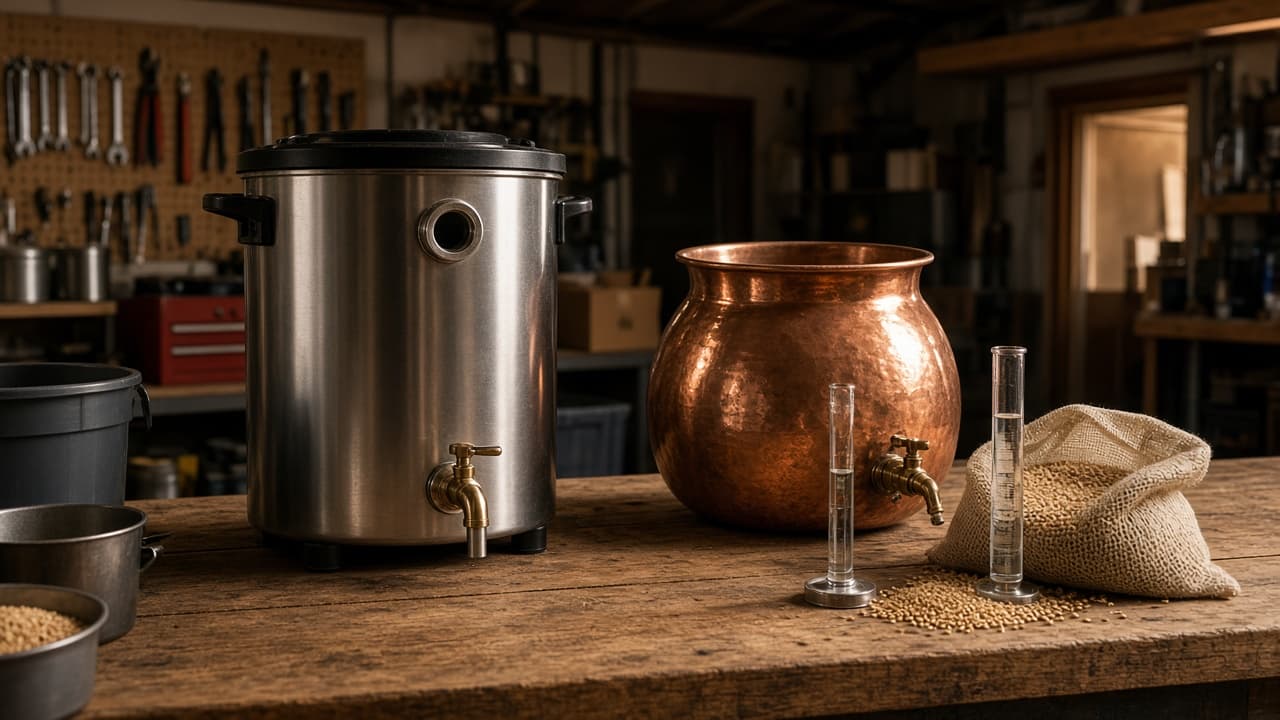
Priming is a small, deliberate fermentation you start on purpose after the main one has finished. You add fermentable sugar (or wort) so leftover or re-pitched yeast makes carbon dioxide in a sealed bottle or keg. That gas becomes carbonation. The method is bottle conditioning. The even technique is bulk priming. The heritage path is /beer-glossary/Priming/.
Finish first
If final gravity is still falling, priming sugar stacks on an unfinished ferment and you get gushers. Confirm stability with a hydrometer. Then calculate volumes of CO2 for the style: a wheat beer wants more gas than a British-leaning bitter.
Force-carbonating a keg with cylinder CO2 skips priming. That is also valid. Priming is not morally superior.
Australian heat
A 35 °C shed overprimes, then the bottles become unsafe. Condition warm enough for yeast, then store cool and dark. Light-struck is a separate clear-glass problem.
Homebrew basics holds the calculator habit. Sanitize bottles. Legal limits apply; you may not sell the case. Official harm reduction: alcohol.gov.au. This is beerguide.com.au. No invented CO2 volumes for named commercial beers.
Arithmetic that keeps a case from becoming a ceiling
Priming sugar is not a flavour adjunct. It is a measured fermentable that leftover yeast will turn into carbon dioxide in a sealed package. Too little and the bitter arrives slack. Too much and you decorate a Queensland ceiling. The beer must have reached a stable final gravity first. Bulk priming is the even method. Spooning dry crystals into bottles is how volumes wander.
Style targets differ. A wheat beer often wants a lively bead. A British-leaning ale wants less. A stout can go either way depending on the recipe. Calculators exist; use one that matches your volume and temperature. Dextrose, sucrose, and dry malt extract all work. Honey and juice wander.
Force-gassing a keg skips priming. That is valid. Bottle conditioning is priming plus time. Carbonation is the result, not the method. Store bottles warm enough for yeast, then cool and dark. Light-struck is a clear-glass problem, not a sugar problem.
Homebrew basics holds the packaging chapter. Sanitize bottles and crowns. Legal limits apply; you may not sell the case. This site will not invent volumes of CO2 for a named commercial can.
Cite /beer-glossary/Priming/. Official harm reduction: alcohol.gov.au. This is beerguide.com.au. Eighteen and over.
If a bottle gushes, treat the rest of the case as suspect. Chill hard, open over a sink, and do not ship them to a friend as a gift.
Temperature after the crown is still part of priming
You can calculate a perfect charge and still overcarbonate if the case sits in a 36 °C shed for a fortnight. Yeast works faster in heat. Then the bottles become unsafe. Condition in a moderate room, then store cool. Carbonation is the result. Bottle conditioning is the method. Bulk priming is the even technique.
Open a test bottle after a week. If it is slack, wait. If it gushes, chill the rest and be careful. Do not mail suspects.
Cite /beer-glossary/Priming/. Legal limits apply. This is beerguide.com.au. Eighteen and over.
If you lost count of the sugar, do not guess a second dose into the same beer. Measure the next batch.
Test bottle, then patience
Open one bottle after seven days. Slack means wait. Gush means chill and be careful with the rest. Do not add a second guessed dose. Bulk priming keeps the next case even. Homebrew basics. This is beerguide.com.au. Legal limits apply.
DME versus table sugar
Dry malt extract primes with a little more flavour; table sugar is cleaner. Both work if you calculate. This is beerguide.com.au. Bulk priming still wins on evenness.
One more cellar note
Cold beer holds gas. Open test bottles cold. A warm test will gush and lie. This is beerguide.com.au.
If you lose the calculator, use a trusted club chart that matches your volume — then check the units. Open the test bottle cold so the gas stays in the beer long enough to judge. This is beerguide.com.au. Bulk priming still keeps the rest of the case even.