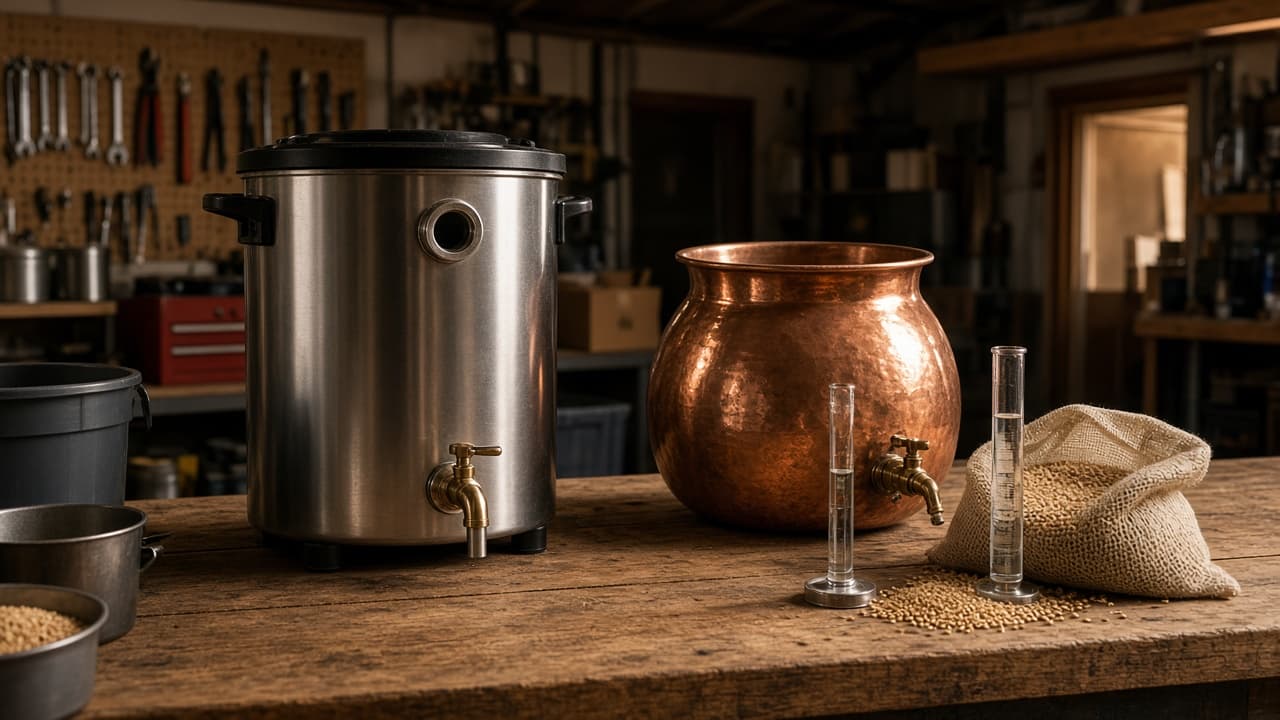
Bottle conditioning is how a sealed package becomes its own small fermenter. The brewer adds a measured priming sugar, a dose of wort, or relies on remaining fermentables, then crowns the bottle with viable yeast still in suspension or re-pitched. Those cells make carbon dioxide that has nowhere to go except into solution. Flavour can also change as the yeast scavenges oxygen and continues a quiet secondary fermentation. The heritage path is /beer-glossary/Bottle-Conditioning/.

What you will see in the glass
A thin yeast film or a tan sediment is normal. It is not dirt and it is not a ranking. Pour steadily and leave the last centimetre if you want a brighter ale. Some wheat beers are meant to be cloudy; the producer’s note wins. Chill haze is a different cloud — protein and polyphenol, not yeast.
Force-carbonated beer — gas added from a cylinder into a keg or bright tank — can be just as well made. Bottle conditioning is a method, not a moral high ground. Many Australian independents do both across a range.
Homebrew: measure, then wait
Bulk priming dissolves sugar in the whole batch before bottling so each bottle gets a similar charge. Spooning dry sugar into bottles is how you get gushers and duds in the same case. Homebrew basics and a hydrometer reading that shows final gravity is stable come first. Bottling a beer that is still fermenting is how you decorate a ceiling.
Warmth speeds the condition; then the beer wants a cool rest. Australian summer sheds overcondition and then oxidise. Store dark. Light-struck faults are a different problem of clear glass and sun.
Australian retail notes
A specialist bottle shop can tell you whether a beer is bottle-conditioned. A supermarket shelf may not. Turn the bottle; look for sediment; read the producer’s storage line. Do not invent a “best conditioned” list. Confirm ABV. Drink if you are 18 or over.
Official labelling: FSANZ. Harm reduction: alcohol.gov.au. This is beerguide.com.au. Education. No invented carbonation scores.
A small fermenter with a crown
Bottle conditioning is yeast working on a priming charge in a sealed package. Sediment is normal. Force-gassed beer can be just as well made. Bulk priming keeps a homebrew case even. Finish final gravity first.
Store dark. Light-struck is a different fault. Australian summer sheds overcondition. A specialist bottle shop can tell you whether a beer is bottle-conditioned. We will not invent a “best conditioned” list.
Cite /beer-glossary/Bottle-Conditioning/. Homebrew basics. This is beerguide.com.au. Eighteen and over.
Pour steadily and leave the last centimetre if you want a brighter glass. Some wheat beers invite a swirl. The producer’s note wins.
Sediment is a footnote, not a defect badge
Leave yeast in the bottle if you want a brighter ale. Swirl a wheat beer if the producer says to. Neither choice is a trophy. Force-carbonated cans can be excellent. Bottle-conditioned beers can be tired if they sat warm in light. Light-struck and oxidation are separate faults.
A specialist bottle shop is the place to ask. A supermarket shelf may not know. Confirm ABV. Cite /beer-glossary/Bottle-Conditioning/. This is beerguide.com.au.
If the crown leaks, the ferment you wanted became the oxidation you did not.
Warm then cool, never sun
Condition bottles in a moderate cupboard, then refrigerate. A sunny window adds light-struck on top of overcarbonation. Sediment is normal. Wheat beers may want a swirl; the producer’s note wins. This is beerguide.com.au. A specialist bottle shop can tell you which packages are living. We will not invent a “best conditioned” list.
Can-conditioning exists
Some producers condition in the can with the same yeast-and-sugar idea. Sediment still happens. The word on this heritage path stays bottle-conditioning. This is beerguide.com.au. Store dark. Read ABV.
One more cellar note
Lay bottles upright for a day before you pour if you want a tighter sediment. Swirl only when the style invites it. This is beerguide.com.au. Store cool after the condition.